

When Banks Say No, Smart Solutions Say Yes
You found the car. You did the math. You walked into your bank ready to sign the paperwork — and they said no. Maybe your credit isn’t where it used to be, or you switched jobs recently, or the bank simply doesn’t want to take a chance on you right now.
Here’s something most people don’t know: about one in three Americans has a credit score below 670, and that’s the cutoff most traditional banks use before they’ll approve a competitive auto loan. If you’re in that group, the dealership financing office and your local bank aren’t your only options. They’re just the most obvious ones.
This guide is about what to do next — practical, legitimate ways to finance a vehicle when the traditional path closes.
Why Banks Reject Auto Loan Applications (And Why It’s Often Not Just Credit)
People assume rejection means their credit score is too low. Sometimes that’s true. But banks turn down auto loan applications for a lot of reasons that have nothing to do with your past:
- Your debt-to-income ratio is too high, even if your credit is decent
- You don’t have enough employment history at your current job (under 6 months is a red flag)
- Your down payment is smaller than the bank’s policy requires
- The car you picked is older or has high mileage that the bank won’t finance
- Internal lending policies tightened that quarter
Knowing why you got declined matters more than the rejection itself. You’re allowed to ask the loan officer for specifics, and you should.
Where to Actually Get Auto Financing When Banks Say No
Here are the options that actually work, in roughly the order you should try them.
1. Credit Unions
Credit unions are the single most underused option in auto financing. They’re member-owned, smaller, and their loan officers have more flexibility than a big bank. If your credit is between 580 and 680, your approval odds at a credit union are noticeably higher than at a major bank — and the rates are usually lower than buy-here-pay-here dealers.
2. Online Auto Lenders
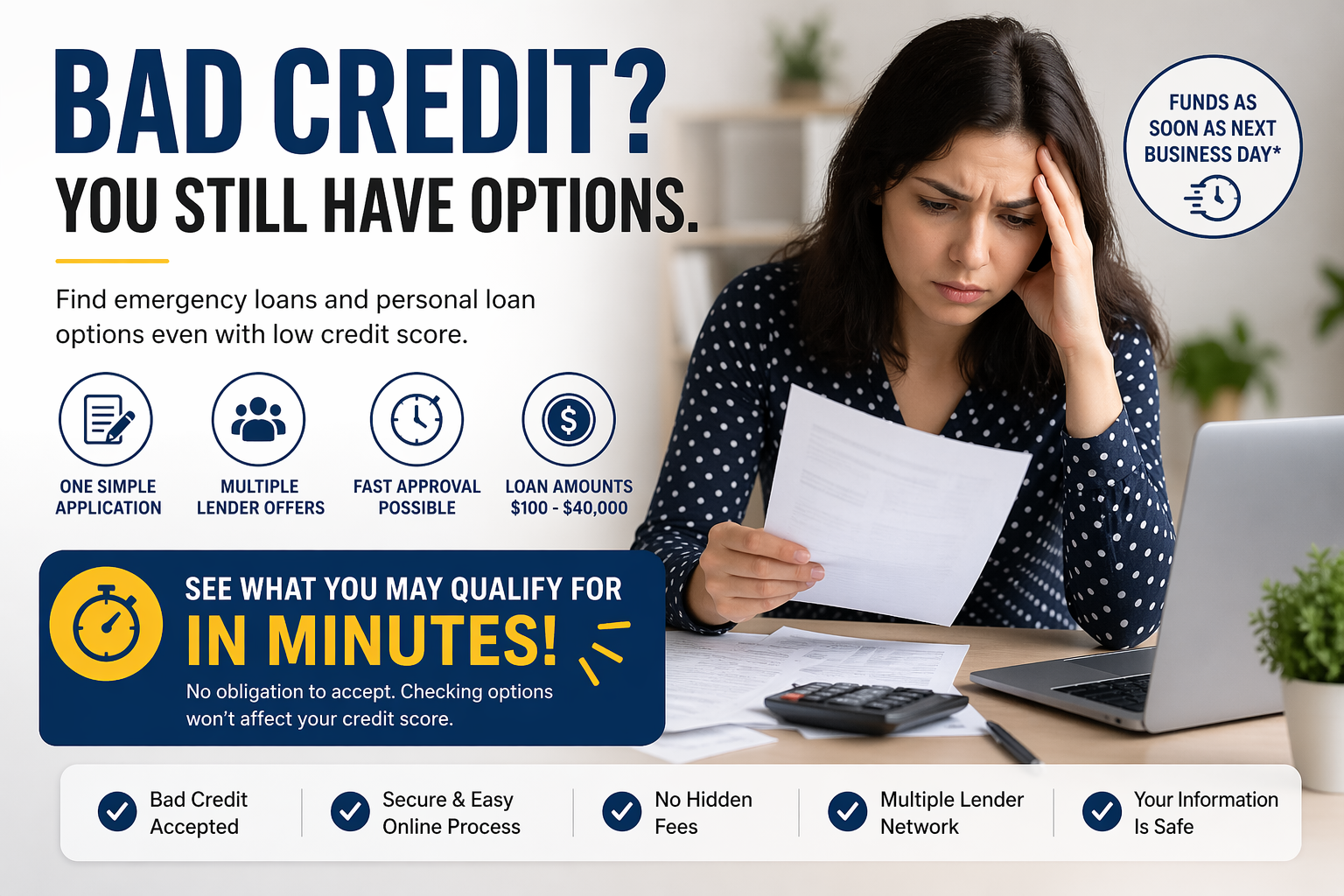
Companies like Auto Credit Express, Carvana, MyAutoLoan, and Capital One Auto Navigator specialize in subprime and near-prime borrowers. You can submit one application and get matched with several lenders without each one doing a hard credit pull. Capital One in particular offers a pre-qualification tool that shows you what rate you’d actually get before you commit.
3. Buy Here, Pay Here Dealerships (With Caution)
These dealerships approve almost anyone because they finance the car themselves. Approval is fast. Rates are high. Read the contract closely — repossession terms are aggressive, and missing one payment can mean losing the car. Use this only if you genuinely can’t get financed elsewhere and you need the car for work.
4. Co-Signer Loans
If you have a family member with strong credit who trusts you, a co-signed auto loan can get you bank-level rates even with a weak credit profile. Just understand what you’re asking: if you miss payments, their credit takes the hit too. This needs to be a real conversation, not a casual ask.
5. Larger Down Payment
This is the boring option, but it works. Banks that said no to financing $20,000 might say yes to financing $12,000 if you bring $8,000 down. Sometimes the path forward is waiting two more months, saving aggressively, and then walking back in.
What to Avoid
Not every “smart solution” is actually smart. Stay away from:
- Lenders advertising “guaranteed approval, no credit check” with no documentation (these are almost always predatory)
- Anyone asking for upfront fees to “secure” your loan before approval (that’s a scam)
- Title loans on a car you already own to buy a different car (interest rates routinely exceed 200% APR)
- Long-term loans of 72 or 84 months that lower your monthly payment but leave you underwater for years
The Real Smart Move
The smartest thing isn’t finding the fastest yes. It’s finding the loan that fits your real budget, with a repayment term you can actually finish without missing payments. A 60-month loan you can comfortably afford beats a 36-month loan you’ll default on.
Before you sign anything, do three things: check your credit report for errors, get pre-qualified with at least two lenders, and calculate the total cost over the life of the loan — not just the monthly payment. A $400 monthly payment over 72 months at 12% APR costs you a lot more than a $480 payment over 48 months at 8%.
A “no” from your bank is information, not a verdict. Use it to find the lender who’ll actually say yes — on terms you can live with.