

Auto Loan Delinquencies: The Slow-Motion Crisis Nobody’s Talking About
Auto Loan Delinquencies: The Slow-Motion Crisis Nobody’s Talking About
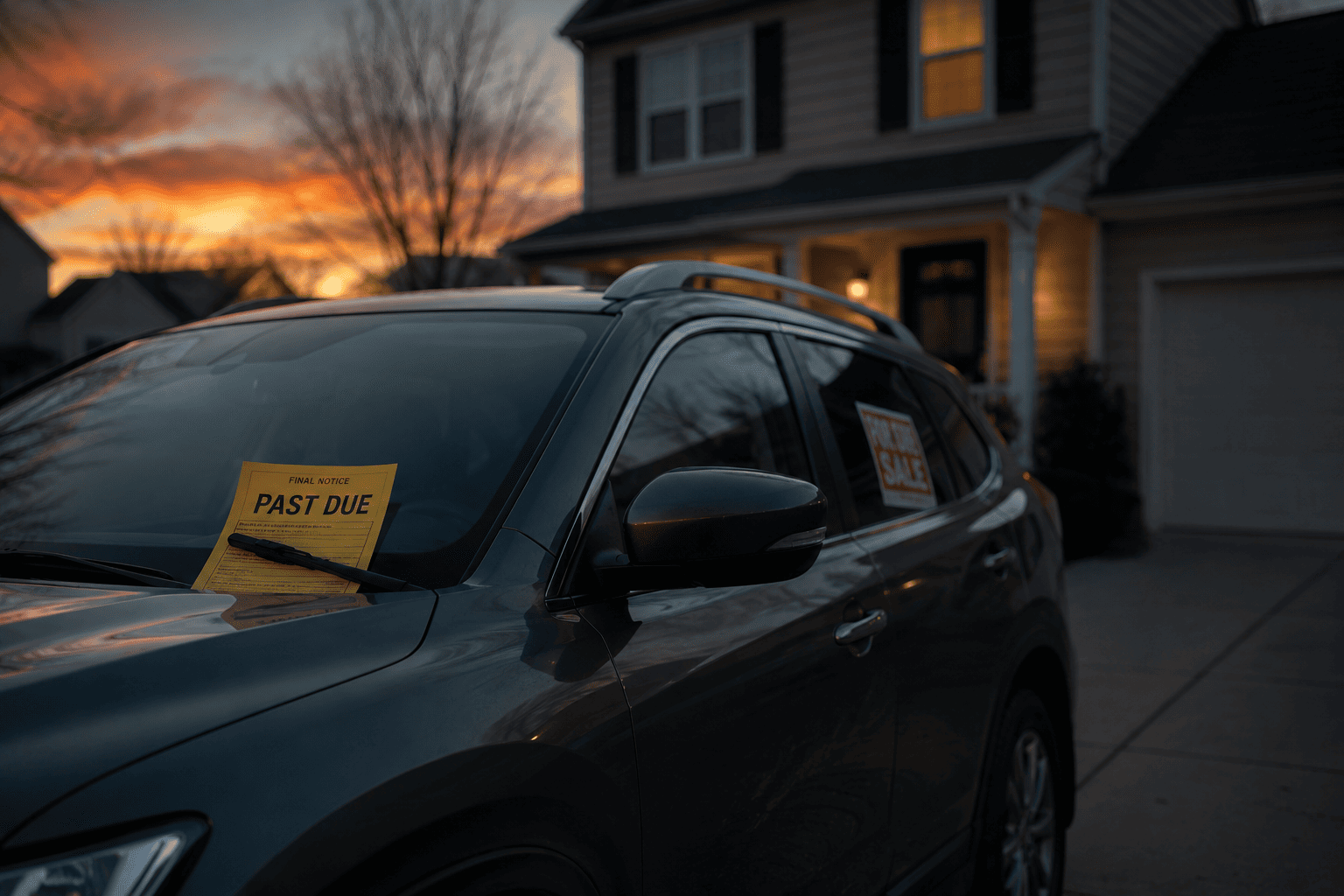
Walk through any parking lot in America and you’ll see them: gleaming pickup trucks, oversized SUVs, sleek crossovers. What you can’t see is the financial weight behind those shiny exteriors. Behind a growing share of those steering wheels sits a borrower who’s already missed a payment, dodging calls from the lender, hoping the repo truck doesn’t show up before payday.
This is the quiet financial story of 2026, and the numbers are starting to demand attention. Auto loan delinquencies have climbed to levels that haven’t been seen in more than a decade, and in the subprime corner of the market, things look genuinely historic. The problem is that almost nobody outside the lending industry is talking about it.
A Record Hiding in Plain Sight
The headline statistic is sobering. The auto loan serious delinquency rate (90+ days past due) reached 5.2% in Q4 2025 — the highest level since the financial crisis recovery peak of 5.3% in Q4 2010. That’s essentially Great Recession territory, except we’re not in a recession. Americandefault
The truly alarming data sits one tier down. According to Fitch data analyzed by industry expert Bill Ploog, the January 2026 figures mark a 385-month record high for 60-plus-day past-due delinquencies among subprime borrowers. You have to go back to January 1994 — before most current car buyers were even born — to find subprime delinquency rates this severe. CarEdge
What makes this different from previous downturns is the backdrop. In 2010, when auto delinquency last hit these levels, unemployment was above 9%. Today it’s 4.3%. People have jobs. Wages are rising on paper. And yet the car payment, often the last bill a struggling family will skip, is increasingly going unpaid. Americandefault
The Three Forces Behind the Squeeze
If you’re wondering how we ended up here, three trends explain almost everything.
The first is price. The cost of putting a vehicle in your driveway has spiraled to levels that strain even middle-class budgets. The average new car payment reached a record $767 a month in the fourth quarter of 2025, up 2.8% from Q4 2024. In many parts of the country, that’s more than a one-bedroom apartment. The math just doesn’t work for ordinary families anymore. LendingTree
The second is loan length. Lenders responded to high prices not by lowering them, but by stretching repayment further into the future. 72-month, 84-month, and even 96-month auto loans have become commonplace. An eight-year loan creates the illusion of affordability while quietly trapping borrowers in years of negative equity — owing far more than the car is actually worth. CarEdge
The third is loose underwriting in the subprime market. If you can prove you have a pulse and a minimal income, there’s likely a lender willing to approve you — often at predatory interest rates and on terms designed to maximize lender and dealer profit at the borrower’s expense. Wall Street’s appetite for packaged auto loans has kept this machine running, even as the warning lights flash red. CarEdge
Why Missing a Car Payment Means Something Different
To understand why economists are watching this number so closely, you have to understand where car payments sit in the household budget. When cash gets tight, households make a hierarchy of payments. Credit cards get skipped first. Then medical bills. Then rent, sometimes. The car payment is one of the last things to go, because losing a car has immediate, concrete consequences: inability to commute to work, transport children, access essential services. Americandefault
In other words, by the time someone is 90 days late on their Auto Loans in 2026 Will Shock You! Interest Rates Are Changing Fast, they’ve usually exhausted every other escape route. Auto loan delinquency is a late-stage signal — by the time it appears, the household is in deep financial distress. That’s why rising delinquencies aren’t really a story about cars. They’re a story about families running out of options. Americandefault
A Tale of Two Borrowers
Perhaps the most striking feature of this crisis is how uneven it is. For subprime borrowers, the chart has been deep red for nearly four consecutive years, from 2023 through early 2026. Prime borrowers, by contrast, have delinquency rates that remain healthy and stable. The crisis is concentrated squarely among those who can least afford it. CarEdgeCarEdge
Geography compounds the unfairness. Markets with a higher share of used-vehicle financing, such as Mississippi, Louisiana, and Georgia, are experiencing greater delinquency pressure than markets weighted toward new vehicles. Higher loan-to-value ratios and longer terms in used-car deals leave borrowers even more vulnerable to job losses or surprise expenses. Defisolutions
What 2026 Looks Like From Here
Don’t expect quick relief. Credit reporting bureau TransUnion expects auto finance delinquencies to be very slightly higher, if not roughly flat, at year-end 2026 vs. the present day. The story heading into 2027 is one of stubborn, elevated stress rather than recovery. WardsAuto
For consumers, the practical playbook hasn’t changed but has become more urgent. Buy less car than you think you need. Avoid loan terms longer than 60 months. Put real money down so you’re not immediately underwater. Refuse to negotiate by monthly payment alone — that’s the dealer’s favorite trap. And if you’re already drowning, contact your lender before the situation hardens. When a borrower falls 60 or more days behind on their auto loan payment, banks begin seriously considering repossession. A phone call beats a tow truck every time. CarEdge
The Bigger Signal
Rising auto delinquencies are easy to dismiss as someone else’s problem until they aren’t. They’re an early read on how households are actually surviving in an economy that looks healthy from 30,000 feet but feels punishing on the ground. The cars in those driveways still look beautiful. The financial story behind them is anything but.